

Key Takeaways - An odometer disclosure statement is a legal document that records a vehicle's mileage at the time of sale and is required under federal law for most vehicle transfers. - Federal law generally requires the form for vehicles under 10 years old and under 16,000 pounds. Requirements may vary by state. - Both the buyer and seller must sign the odometer disclosure form. Providing false mileage information is a federal offense. - Some states provide their own odometer disclosure forms. When no state form exists, a general federal odometer disclosure statement is typically accepted. - 360 Legal Forms provides a free, attorney-vetted odometer disclosure statement you can create, customize, and download in minutes.
An odometer disclosure statement is a written record of a vehicle's mileage at the point of ownership transfer. Under the federal Truth in Mileage Act (49 U.S. Code § 32705), sellers are generally required to complete this form when selling a qualifying vehicle. It protects both parties and creates an official mileage record tied to the vehicle's history.
360 Legal Forms makes it straightforward to create a free odometer disclosure statement customized for your state in just a few steps.
What Is an Odometer Disclosure Statement?
An odometer disclosure statement is a legal form in which the seller of a vehicle certifies the vehicle's mileage to the buyer at the time of sale. It becomes part of the vehicle's permanent ownership history and is typically attached to the vehicle bill of sale or title transfer documents.
The form also allows the seller to flag discrepancies — for example, if the odometer has exceeded its mechanical limits or if the seller cannot confirm the mileage is accurate.
Commercial vehicles above certain weight thresholds are generally exempt from this requirement. Check your state's rules to confirm whether your vehicle qualifies.
Odometer Disclosure Form vs. State DMV Form
Some states issue their own odometer disclosure forms through the Department of Motor Vehicles (DMV). When a state form exists, it is generally required in place of a generic federal form. When no state-specific form is available, a general federal odometer disclosure statement is typically accepted.
360 Legal Forms generates the correct form for your state based on where you're completing the transfer.
Other Names for an Odometer Disclosure Statement
Depending on your state and context, an odometer disclosure statement may also be referred to as:
- Odometer Disclosure Form
- Mileage Disclosure Statement
- Odometer and Damage Disclosure Statement
- Secure Odometer Disclosure Form
- Federal Odometer Disclosure Statement Form
Start your free odometer disclosure statement at 360 Legal Forms.
Who Needs an Odometer Disclosure Statement?
In most cases, both the buyer and seller must complete and sign an odometer disclosure statement when transferring ownership of a qualifying vehicle.
Common situations include:
- Private vehicle sales: Any individual selling a personal vehicle generally must provide a completed odometer disclosure form to the buyer.
- Dealer sales: Licensed dealers are typically required to complete the form for qualifying vehicle transfers as part of the title process.
- Vehicle donations and gifts: Transferring a vehicle without payment still typically requires mileage disclosure under federal and state law. A vehicle bill of sale is also typically completed to document the transfer.
- Estate transfers: When a vehicle is transferred as part of an estate, an odometer disclosure statement is often required to complete the title change.
Vehicles that are generally exempt include those over 10 years old, heavy commercial vehicles above 16,000 pounds, and new vehicles transferred to a dealer. Confirm your state's specific exemptions before proceeding.
Create your odometer disclosure statement now customized for your state.
What Does an Odometer Disclosure Statement Include?
A complete odometer disclosure statement form includes the following fields:
How to Fill Out an Odometer Disclosure Statement
Completing a sample odometer disclosure statement correctly helps ensure the transfer is accepted by your state's DMV and title agency. Follow these steps:
Step 1: Enter Vehicle Information
Record the vehicle's year, make, model, body type, and Vehicle Identification Number (VIN). This ties the disclosure to the specific vehicle being transferred and must match the information on the title.
Step 2: Record the Odometer Reading
Write the exact mileage shown on the odometer at the time of the sale. Do not round or estimate. If the odometer has rolled over its mechanical limit or if the reading cannot be confirmed as accurate, this must be disclosed in the next step.
Step 3: Select the Mileage Certification
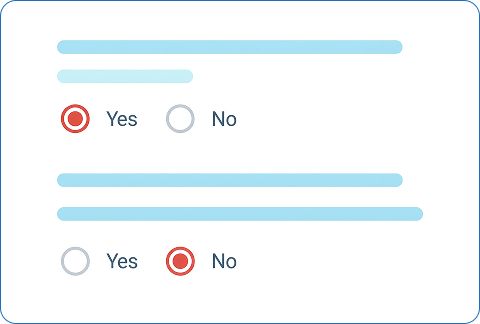
The seller must check one of three options:
- The odometer reading reflects the actual mileage.
- The odometer reading has exceeded its mechanical limits (i.e., it has rolled over).
- The odometer reading is not the actual mileage (unknown or known discrepancy).
Checking the wrong box or leaving it blank can invalidate the disclosure.
Step 4: Complete Buyer and Seller Information
Both parties enter their full legal name, current address, and any other identifying details required by the requesting state or agency.
Step 5: Sign and Date
Both the buyer and seller must sign and date the completed form. In most cases, signatures must be witnessed or notarized; check your state's specific requirements before finalizing.
Step 6: Attach to the Title Transfer Documents
The completed odometer disclosure statement is generally submitted alongside the vehicle title when registering the new ownership with your state's DMV. Keep a copy for your own records. A vehicle bill of sale and vehicle promissory note are typically completed at the same time.
Use our form generator and skip the guesswork; your form is ready in minutes.
How to Create an Odometer Disclosure Statement with 360 Legal Forms
Creating a free odometer disclosure statement with 360 Legal Forms takes just a few minutes. Our form generator walks you through a short questionnaire and produces a completed, notary-ready form customized for your state. Once done, download your document as a PDF or Word file from your secure online account.
What Information Will I Need to Create My Odometer Disclosure Statement?
To build your document, have the following ready:
- Seller Details: Full legal name and address of the vehicle seller.
- Buyer Details: Full legal name and address of the vehicle buyer.
- Vehicle Information: Year, make, model, body type, and VIN.
- Odometer Reading: The exact mileage displayed on the odometer.
- Mileage Certification: Whether the mileage is actual, exceeded, or unknown.
- Date of Statement: The date both parties will sign.
- Signatures: Signed by both buyer and seller.
Odometer Disclosure Statement Terms
- Odometer: An instrument in a vehicle that measures and records total distance traveled.
- VIN (Vehicle Identification Number): A unique 17-character code assigned to every motor vehicle that identifies it throughout its lifetime.
- Mileage Disclosure: The act of formally recording and certifying a vehicle's odometer reading during a transfer of ownership.
- Discrepancy: A conflict between the stated mileage and the actual or verifiable mileage of the vehicle.
- Mechanical Limit: The maximum mileage an odometer can display before it rolls back to zero. A five-digit odometer rolls at 99,999 miles; a six-digit odometer rolls at 999,999.
- Odometer Fraud: The illegal act of tampering with or misrepresenting a vehicle's odometer reading. This is a federal felony under 49 U.S. Code § 32703. Learn more at the National Highway Traffic Safety Administration.
- Truth in Mileage Act: The federal law (enacted in 1986) that requires odometer disclosure on qualifying vehicle transfers and created a national database to record vehicle mileage history.
Odometer Disclosure Statement Signing Requirements
In most cases, both the buyer and seller must sign the completed odometer disclosure statement at the time of the vehicle transfer. Some states may require a witness or notarization. The signed form is generally submitted to the DMV along with the title. Check your state's requirements and the rules of the relevant title agency before finalizing your document.
Create your attorney-vetted odometer disclosure statement today.
Why Use 360 Legal Forms for Your Odometer Disclosure Statement?
Customized for you, by you
Create your own documents by answering our easy-to-understand questionnaires to get exactly what you need out of your Odometer Disclosure Statement.
Specific to Your Jurisdiction
Laws vary by location. Each document on 360 Legal Forms is customized for your state.
Fast and easy
All you have to do is fill out a simple questionnaire, print, and sign. No printer? No worries. You and other parties can even sign online.
Conclusion
An odometer disclosure statement is a federally required form that protects both buyers and sellers in any qualifying vehicle transaction. Getting it right means recording the correct mileage, selecting the accurate certification, and ensuring both parties sign before the title transfers.
360 Legal Forms makes the entire process straightforward. Create your free odometer disclosure statement today, customize it for your state, and download it as a PDF or Word document from your secure account. No legal experience required.
Bibliography
- Legal Information Institute · Cornell Law School · n.d.
- National Highway Traffic Safety Administration · U.S. Department of Transportation · n.d.
360 Legal Forms is not a law firm and does not provide legal advice. The information provided is for general informational purposes only. Consult a licensed attorney for advice specific to your situation.