

No good landlord wants to remove someone from a rental property. It represents a loss of rent, and it's usually the last step in a long and unfortunate series of events.
Rental agreements are legal documents, and dissolving them is a legal procedure. Creating and sending an eviction notice in accordance with the laws in your state is necessary to begin formal proceedings to remove the tenant.
What Is an Eviction Notice?
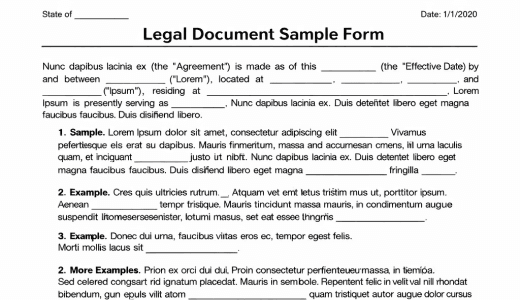
An eviction notice is a formal written document that a landlord serves to a tenant to legally begin the process of ending a tenancy. It must state the specific reason for the eviction, the deadline by which the tenant must comply or vacate, and the landlord's contact information.
Research published in the Proceedings of the National Academy of Sciences, drawing on 99.9 million court records compiled by the Princeton University Eviction Lab, found that landlords filed more than 3.6 million eviction cases per year on average across the United States between 2000 and 2018.[1]
Every single one of those cases began with a first document: a properly written, state-compliant eviction notice.
Getting that document right the first time is essential. A single error in the notice period, the required language, or the delivery method can require you to restart the entire legal process from the beginning.
This guide covers everything: what an eviction notice is, the different types and when to use each, how much time a tenant has to respond, how to write a notice that holds up in court, and how to deliver it correctly.
At the end, you will have everything you need, and 360 Legal Forms will generate a legally sound, state-specific, attorney-vetted notice for you in minutes.
Curable vs. Incurable Eviction Notices
Before you choose a notice type or calculate a deadline, answer one question: can your tenant fix the problem, or do you need them to leave regardless of what they do next? That answer determines everything about the notice you serve.
Curable Eviction Notices
A curable eviction notice gives the tenant an opportunity to remedy the situation that triggered the notice. The landlord sets a deadline, and if the tenant takes the required action within that timeframe, the eviction process ends, and the tenancy continues. This is the most common form of eviction notice in the United States.
Common situations where a curable notice applies:
- The tenant has not paid rent or is consistently late with payments
- The tenant has an unauthorized pet living on the property
- The tenant has an unauthorized occupant in the unit
- The tenant is creating excessive noise in violation of lease terms
- The tenant has made unapproved modifications or alterations to the unit
Example: How a Curable Notice Works in Practice A landlord serves a Pay Rent or Quit notice to a tenant who is 12 days past due on a $1,800 monthly payment. The notice gives the tenant 5 business days (per state law) to pay the full amount owed. The tenant pays on day 3. The eviction process stops. No court filing is needed. If the tenant does not pay within the notice period, the landlord may then file an unlawful detainer action with the local courthouse. The notice becomes the first piece of evidence in that proceeding.
Incurable Eviction Notices
An incurable eviction notice does not give the tenant an opportunity to fix anything. It requires them to vacate the property by a specific date with no option to remedy the situation. These notices are reserved for violations serious enough that no remedy is acceptable or legally required.
Situations where an incurable notice is typically appropriate:
- The tenant has used or sold illegal substances on the premises
- The tenant has caused substantial, intentional damage to the property
- The tenant has engaged in violence or issued threats against other residents or staff
- The tenant has committed the same lease violation multiple times after prior written warnings
- The tenant has been discovered subletting without authorization after previously receiving written notice to stop
If the tenant can fix the problem and you are willing to let them, serve a curable notice with a clear deadline.
If the violation is too serious for any remedy to be acceptable, or if your state law does not require a cure opportunity for the specific type of violation involved, serve an incurable notice. When in doubt, a state-specific attorney-vetted template removes the guesswork from this decision entirely.
IMPORTANT: Attempting to remove a tenant by changing the locks, shutting off utilities, removing their belongings, or physically blocking their access to the property without a court order is called a self-help eviction. It is illegal in all 50 states, exposes landlords to significant civil liability, and courts will not recognize it as valid. Even when a tenant has done something egregious, the legal process must be followed completely.
The Five Types of Eviction Notice
Note: Not all states permit no-cause evictions. California, Oregon, New Jersey, New York under the Good Cause Eviction law, and several other states require landlords to show documented just cause before any eviction can proceed. Always verify your state's requirements before serving any notice.
Other Names for an Eviction Notice
Depending on your state or the specific context, the same document may be referred to by any of these names. They all describe the same category of legal notice:
- Notice to Quit
- Pay or Vacate
- Notice to Vacate
- Pay or Quit
You do not need to research which specific term is legally required in your state. 360 Legal Forms automatically generates the correct form with the correct terminology and required language for your jurisdiction.
KEY TAKEAWAY: The type of eviction notice you serve must match the reason for the eviction and your state's legal requirements. Serving the wrong form, even with accurate information contained in it, can result in a judge dismissing your case and requiring you to start the process over entirely.
Valid Reasons to Send an Eviction Notice
Non-payment of rent is the most common reason eviction cases reach court, a finding confirmed across multiple research sources, including the National Center for State Courts and the Eviction Lab.[1][2]
However, there are several other legally recognized grounds for eviction.
Non-Payment of Rent
This is the most straightforward ground for eviction. If a tenant has not paid rent by the date specified in the lease, the landlord may serve a Pay Rent or Quit notice.
Lease Violation
When a tenant breaks a specific term of the lease, a Notice of Lease Violation gives them an opportunity to correct the problem within the notice period.
Illegal Activity on the Premises
Drug use, drug sales, illegal weapons possession, or any activity constituting a criminal offense on the rental property typically allows a landlord to serve an unconditional quit notice.
Substantial Property Damage
Significant damage to the rental unit beyond ordinary wear and tear is grounds for eviction. Minor scuffs, paint fading, and normal aging are not. The landlord must be able to demonstrate that the damage was caused by the tenant and that it constitutes a material breach of the lease.
End of Lease or Non-Renewal
When a fixed-term lease expires and the landlord chooses not to renew, proper written notice of termination is still required in most states. The required advance notice period varies by state and, in many cases, by the length of the tenancy.
Eviction Notice Periods: How Much Time Does a Tenant Have?
One of the most consequential mistakes landlords make is serving a notice with the wrong deadline. Each state sets its own required notice periods, and those periods vary by the reason for the eviction and sometimes by the length of the tenancy[7].
How Notice Periods Are Counted
Most states do not count the day the notice is served when calculating the notice period. A 3-day notice served on a Monday, therefore, gives the tenant until Thursday to comply, not Wednesday. Some states also exclude weekends and public holidays from the count.
Notice Periods for Repeat Violations
Many states reduce or eliminate the cure period for tenants who have committed the same type of violation more than once within a defined period. California's Civil Code Section 1161(2)[4] for example, allows landlords to serve a Notice to Quit without any cure option if the tenant has already been served and cured the same type of violation once in the past twelve months.
The CARES Act 30-Day Notice Requirement
If your property has a federally backed mortgage loan or participates in a federal housing assistance program such as public housing, Housing Choice Vouchers, or Section 8 Project-Based Rental Assistance, you are subject to Section 4024(c) of the Coronavirus Aid, Relief, and Economic Security (CARES) Act.[3]
This provision, which has no expiration date and remains in effect as confirmed by HUD and multiple federal and state courts, requires landlords of covered properties to provide tenants a minimum of 30 days notice [9] before requiring them to vacate for nonpayment of rent, regardless of your state's shorter standard notice period.[5]
If you are unsure whether your property is a covered property, consult a housing attorney or review the National Housing Preservation Database before serving any notice.
How to Create an Eviction Notice with 360 Legal Forms
To be valid, an Eviction Notice needs to establish certain elements clearly. With 360 Legal Forms, you get access to attorney-vetted legal forms that give you peace of mind. The process is fast and easy.
Our proprietary form generator can help you create your customized Eviction Notice in a few short minutes.
We’ll ask a handful of simple questions. Just fill in the requested information, and we’ll put it together.
You can see your document being created as you go through the questions. Once completed, simply download your form as a PDF or Word document from your secure online account.
What Information Will I Need to Create My Eviction Notice?
To create your document, please provide:
- Issue date: Date when the notice is to be issued
- Personal Information of the Tenant: Name and address of the tenant being evicted
- Personal Information of the Landlord: Name and address of the landlord serving the notice
- Violation: The reason for the eviction
- Property: The address of the property leased to the tenant
- Date of Lease Agreement: When the original lease agreement was signed
Eviction Notice Signing Requirements
In most cases, eviction notices do not need to be signed by the tenant but should carry the landlord’s signature. Eviction notices do not need to be notarized and can be delivered in person by the landlord or via mail.
What to Do With Your Eviction Notice
After creating and signing your Eviction Notice with 360 Legal Forms, you can download and print as many copies as you like. You can deliver an Eviction Notice to a tenant personally or by mail. Registered or Certified Mail is allowed in some states.
Deliver the Notice Correctly
How you deliver the notice is just as important as what it says. Improper service is one of the most common reasons eviction cases are dismissed in court.
- Accepted delivery methods in most states include:
- Personal delivery directly to the tenant, handed to them in person
- Leaving the notice with a responsible adult at the rental property, followed by mailing a copy
- Posting the notice conspicuously on the main entry door AND mailing a copy by first class mail (sometimes called post and mail or nail and mail)
- Certified or registered mail where permitted (most states count the date of receipt, not the date of mailing, toward the notice period)
Create Your State-Specific Eviction Notice in Minutes
You now know exactly what a valid eviction notice requires. Let 360 Legal Forms handle the rest.
- Attorney-vetted templates for all 50 states
- Generates the correct form type, notice period, and required language for your state
- Download as PDF or Word document in minutes
- Both curable and incurable notice types available
Select your state to get started. No legal background required
Bibliography
[1] Gromis, A., Fellows, I., Hendrickson, J. R., Edmonds, L., Leung, L., Porton, A., and Desmond, M. (2022). "Estimating Eviction Prevalence across the United States." Proceedings of the National Academy of Sciences, 119(22), e2116169119.
[2] National Center for State Courts (NCSC). "Reimagining Housing Court: A Framework for Court-Based Eviction Diversion" (2025).
[3] Coronavirus Aid, Relief, and Economic Security (CARES) Act, Pub. L. 116-136, Section 4024(c), codified at 15 U.S.C. § 9058 (2020). Section 4024(c)
[4] California Code of Civil Procedure, Section 1161(2). Governs the requirements for a Three-Day Notice to Pay Rent or Quit in California.
[5] U.S. Department of Housing and Urban Development (HUD). "Tenant Rights, Laws and Protections." HUD.gov. Accessed 2025.
[6] U.S. Government Accountability Office (GAO). "Evictions: National Data Are Limited and Challenging to Collect." GAO Report GAO-24-106637. 2024.
[7] Legal Services Corporation (LSC). "Eviction Laws Database: State/Territory Dataset."
[8] California Courts Self-Help Guide. "Types of Eviction Notices Tenants." Judicial Council of California. Accessed 2025.
[9] National Housing Law Project (NHLP). "Enforcing the CARES Act 30-Day Eviction Notice Requirement." February 2025.